The Literary Legacy of
Telugu Free Verse Poet —Professor Madiraju Ranga Rao
స్వేచ్ఛా కవిత్వము
Free Verse Poetry
Poet, scholar, and visionary who championed free verse as the voice of a democratic age. His life's work spans 160+ poetry collections and 20+ critical works in Telugu literature.
1935 – 2025
160+
Poetry Collections
20+
Critical Works
30+
Years Teaching
22
Scholars Mentored
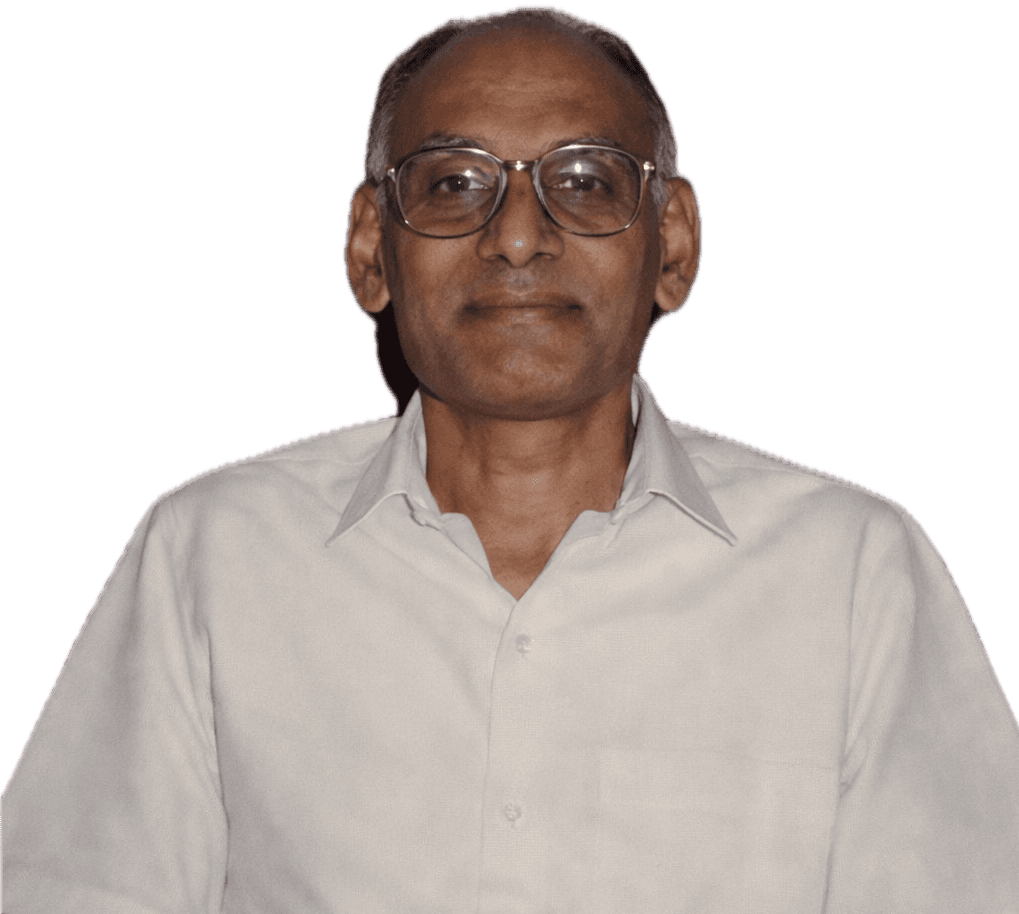
Life in Focus
1935
Born in Pandithapuram, Yellandu, Khammam district
1968
Joins Kakatiya University as faculty
1993
Best Modern Poetry Award — Telugu University
“Free verse poetry suits democratic times better than traditional metrical verse — it is the natural voice of a free people.”
— Professor Madiraju Ranga Rao
వినండి · చూడండి
Watch & Listen
Poetry recitations in Prof. Ranga Rao’s own voice, now on YouTube
A Life in Letters
160+
Poetry Collections
Published across decades
20+
Critical Works
On Telugu literary tradition
30+
Years Teaching
At Osmania & Kakatiya
22
Scholars Mentored
M.Phil & Ph.D. candidates
నిరాశలో మేల్కొంటాను / ఆశతో జయిస్తాను / నే నీ యుగసంకేతాన్ని — మాదిరాజు రంగారావు, యుగసంకేతం (1970) // విచారించడం మానవ స్వభావం / ఆలోచించడం మనోజీవి లక్షణం / దేవతల్లా జన్మించి / రాక్షసుల వలె జీవించి / ప్రయాణం విడిచే రోజు / అంతిమ క్షణం మాత్రం మానవులు / ఆకాశంపై వెలసిన ఇంద్రధనుస్సు / కనిపిస్తుంది చాలమంది కంటికి / మనస్సులో విరిసిన ఇంద్రధనుస్సు / చూడగలడా ? అనుకున్న ప్రతిమనిషి — మాదిరాజు రంగారావు, మేల్కొన్న ఆకాశం (1959) // శిశువు వలె ప్రత్యక్షమై / వృద్ధు వలె నిష్క్రమించే సూర్యుడు / ప్రతి ఉదయం అవతరించు / నిత్య నవ్య పురాణమూర్తి / జీవితమొక చివర తెలియని / చీకటి వంతెన / సంఖ్య తెలియని అనుభవాల / వెలుగు మెట్లపై / అడుగడుగునా పునర్జన్మ ఎత్తినట్లు / అడుగడుగులో స్వర్గ శకల మందినట్లు / గమనం సాగించే / చీకటి ముద్దలు కొందరు / దీప శిఖలు మరికొందరు — మాదిరాజు రంగారావు, మానవీయం (1970) // నేనీ క్షణం అనేక వాసంత సూర్యుల కళ్యాణ కాంతికి సంకేతం / నేనీ క్షణం రస ప్రవాహాల ఆనంద నృత్యానికి అవనీ చక్రం — మాదిరాజు రంగారావు, ఆనంద ధుని (1975) // గగన తలంపై వెలిగే సూర్య చంద్రులు / ఏ విశ్వనాథుని కీర్తి చిహ్న కేతనాలు? / నా కనుల నుండి మీ కనులదాక / మింటి కెగసి నిల్చిన తాజ్మహల్ / అజంతా శిల్పకళా ఖండాల్లా / లక్షలాది రసరాణ్మణుల / సమాకర్షించలేని; శిశువునకు / పశువునకు, స్పందించే గుండెలేని / తనూశిలకు కనుపించని / స్వచ్ఛ శ్వేతవర్ణ మూర్తివంతములు / కాలశ్మశానంలోని కీర్తిస్తంభాలు — మాదిరాజు రంగారావు, కీర్మీరం (1957) // మేఘాన్ని అమ్మే దెవరు ? / హృదయాన్ని కొనే దెవరు — మాదిరాజు రంగారావు, హృది నుండి హృదికి (2023) // బహు శాఖలతో సృజన తరువు / పలు పాయాలతో జీవన ఝరి / జన హిత కర తేజో రుచిరం / స్వేచ్ఛా కవిత్వం సర్వ స్వతంత్రం — మాదిరాజు రంగారావు, మౌనం మాట్లాడుతుంది (2024)
The Collected Works
స్వేచ్ఛా కవిత్వము
Nine volumes spanning seven decades — freely available to read.
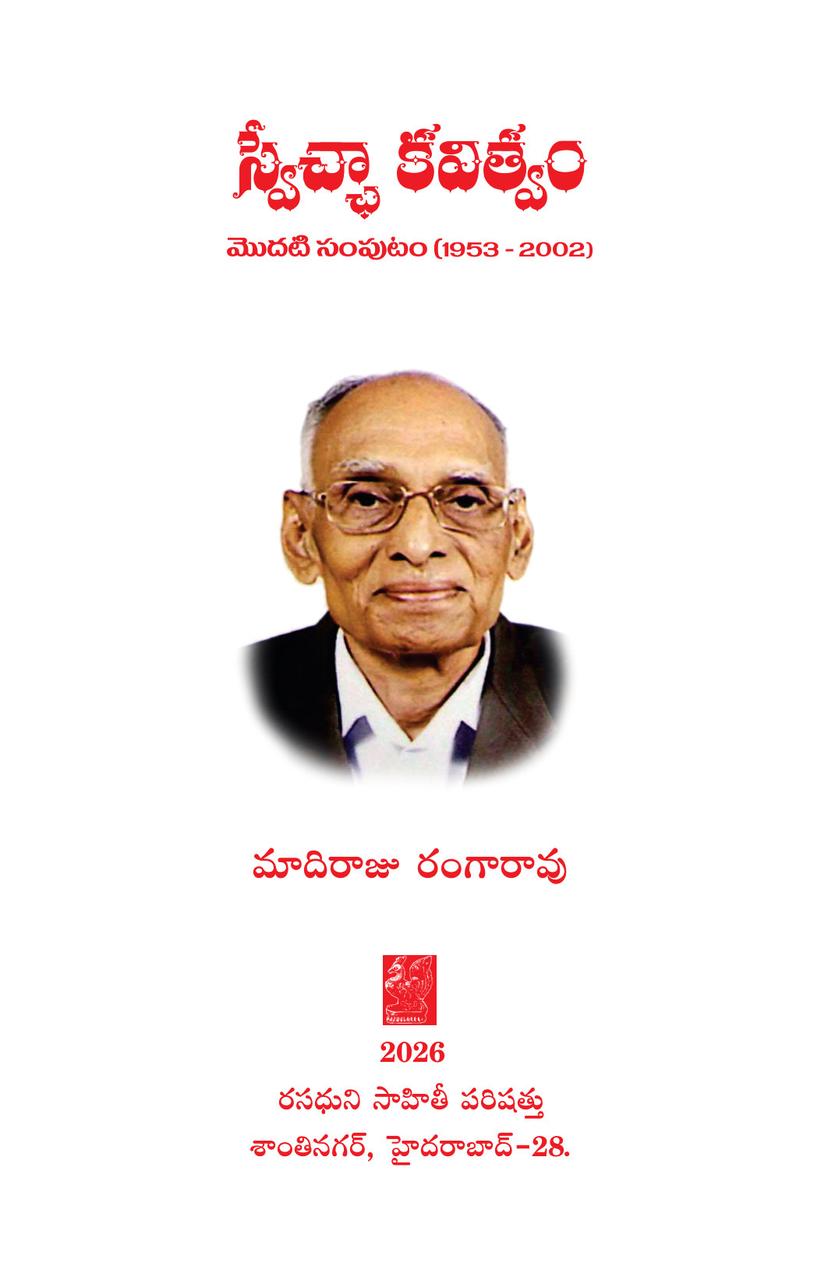
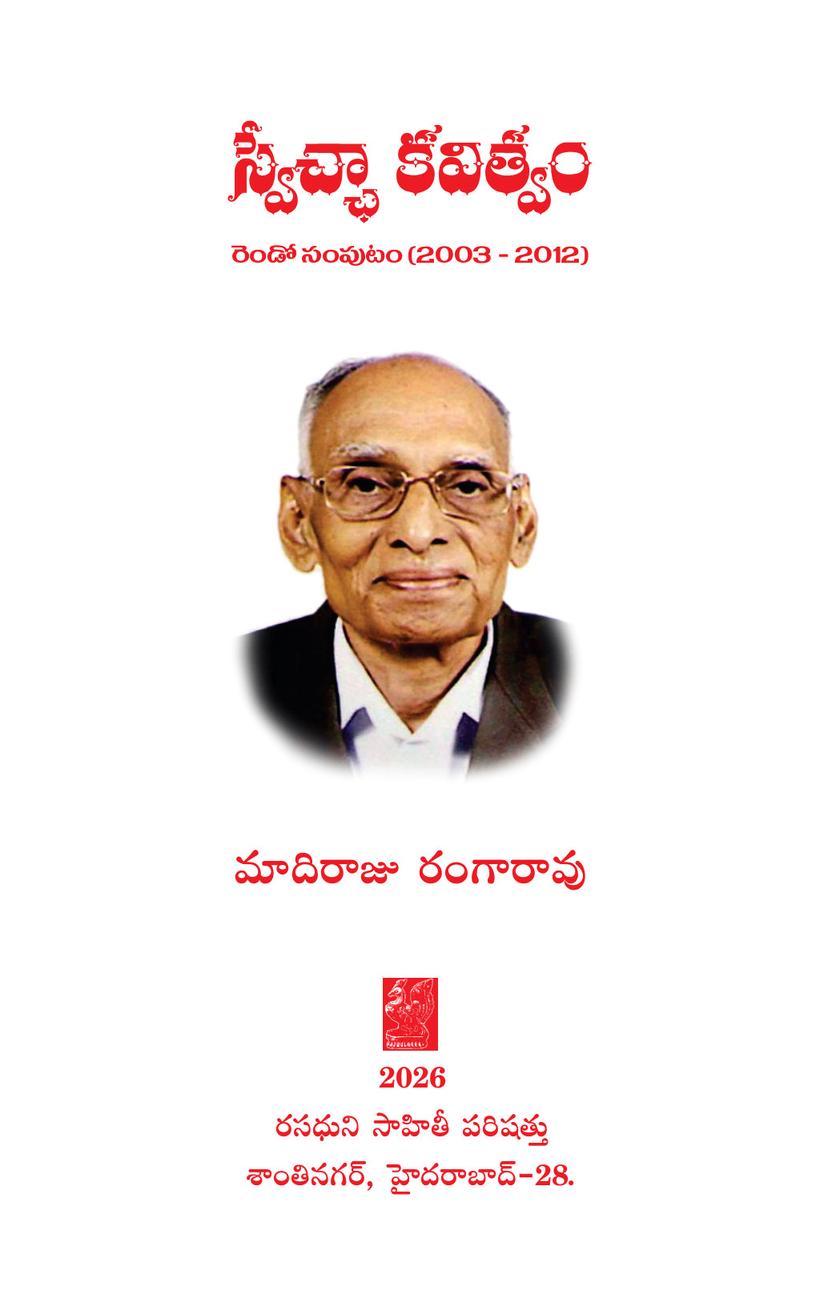
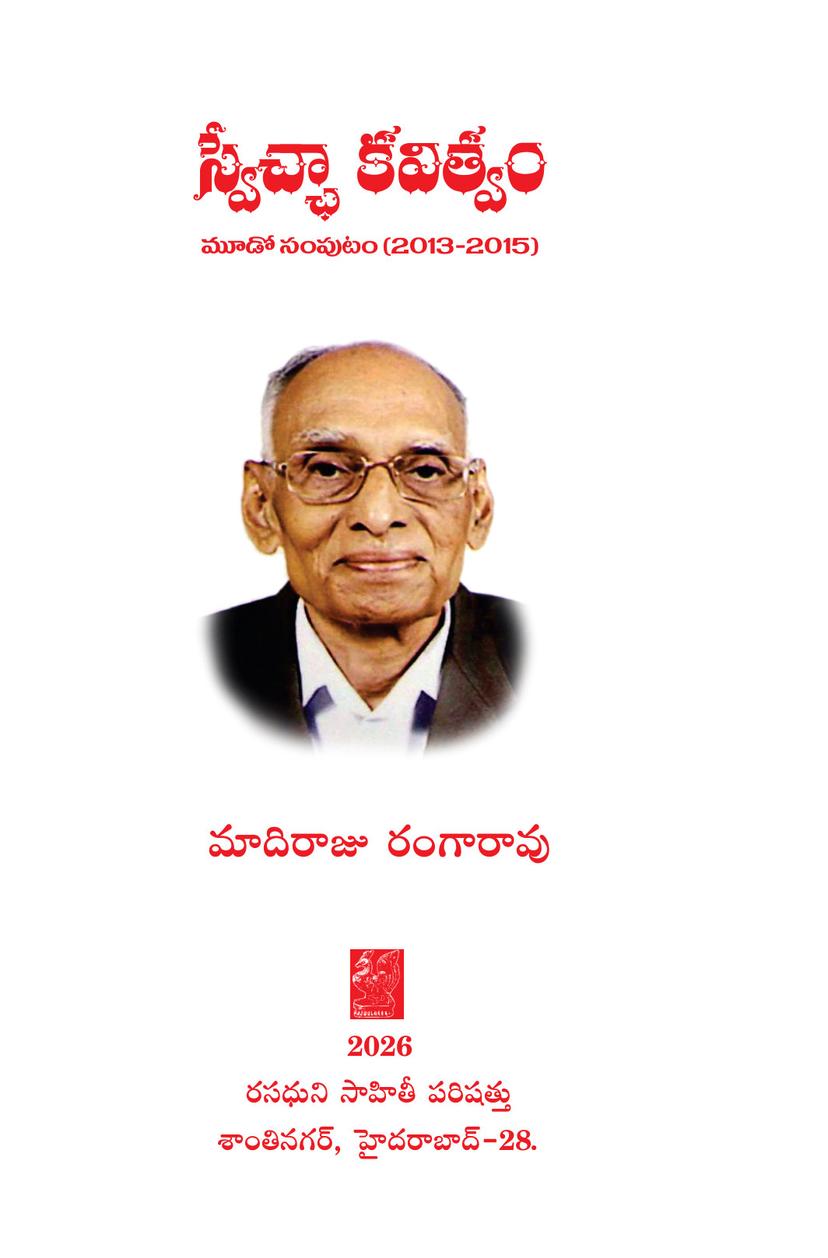
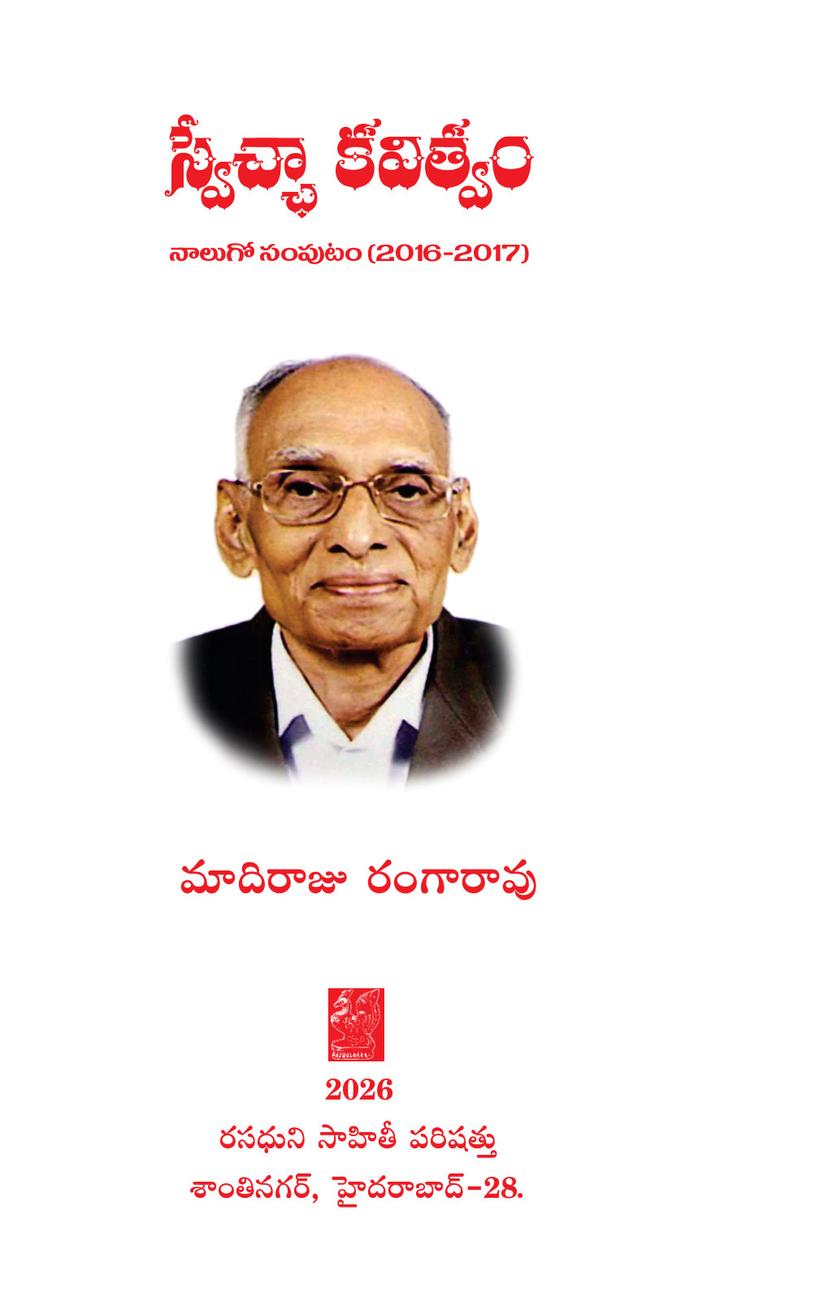
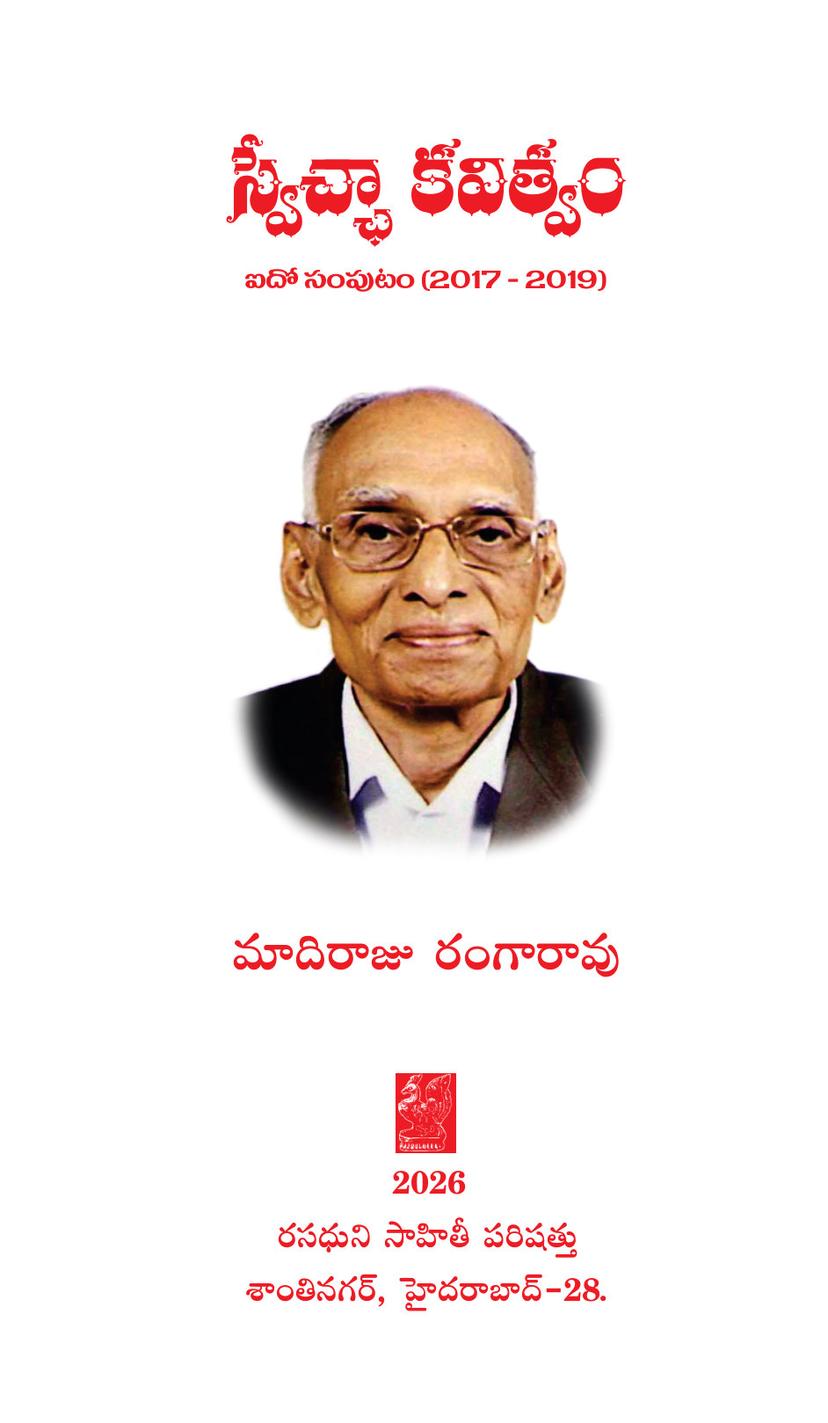
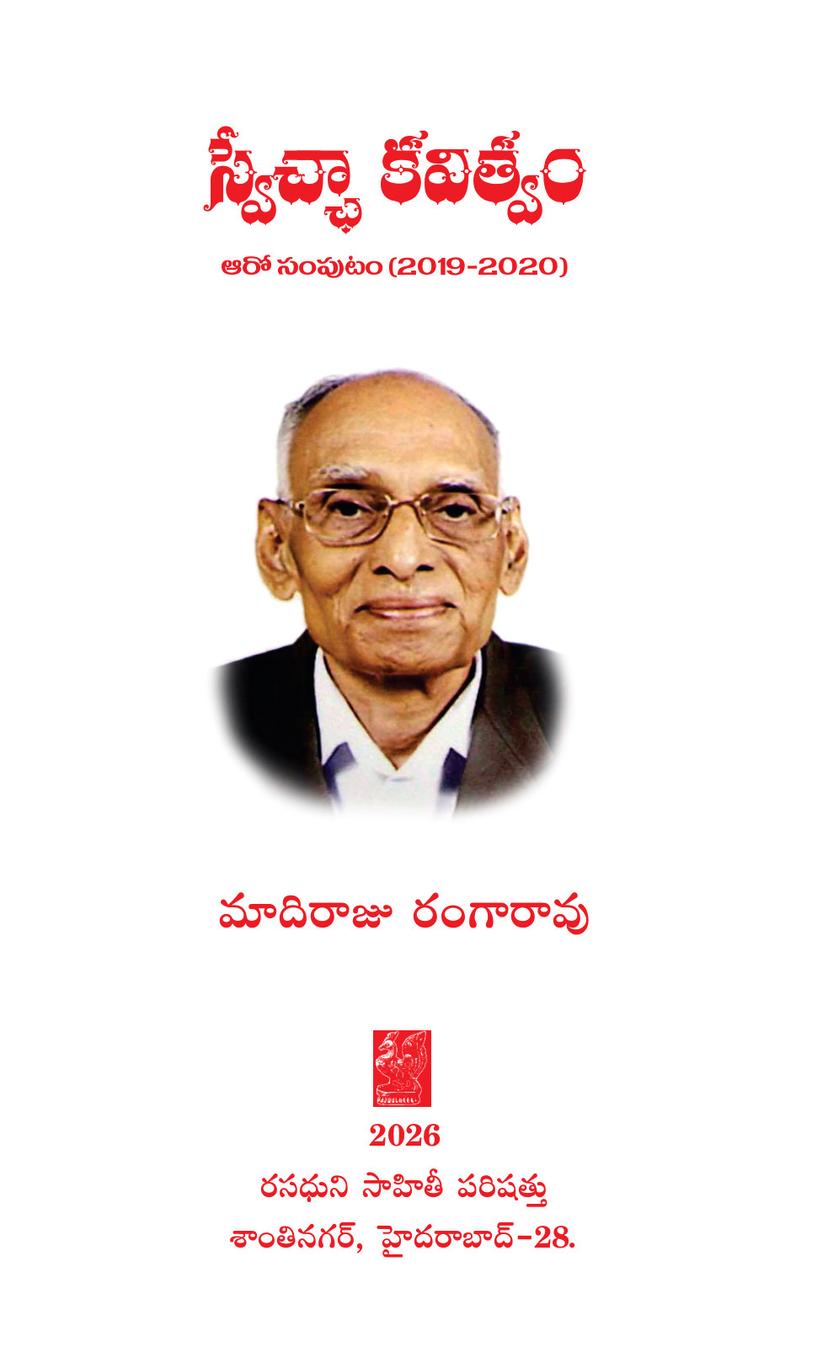
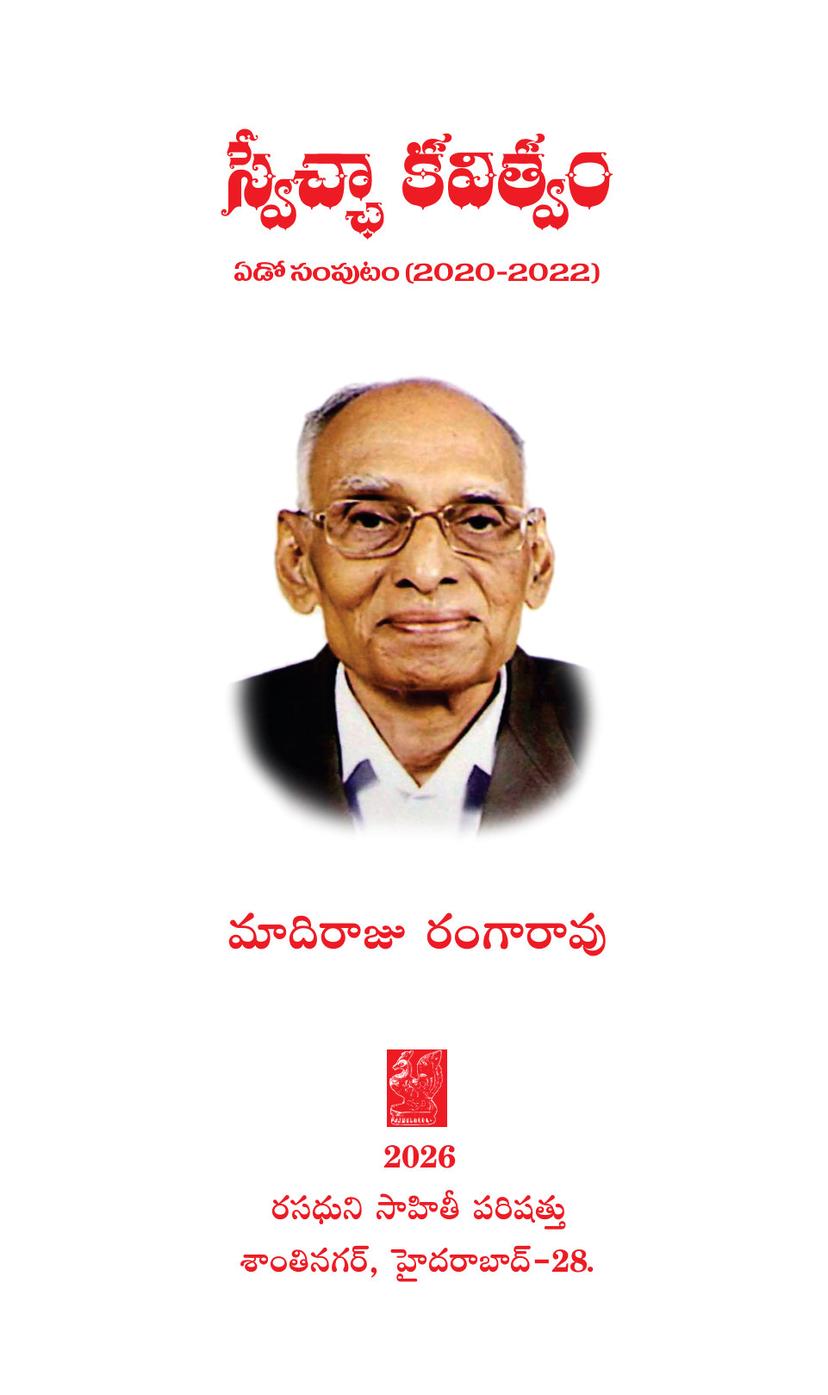
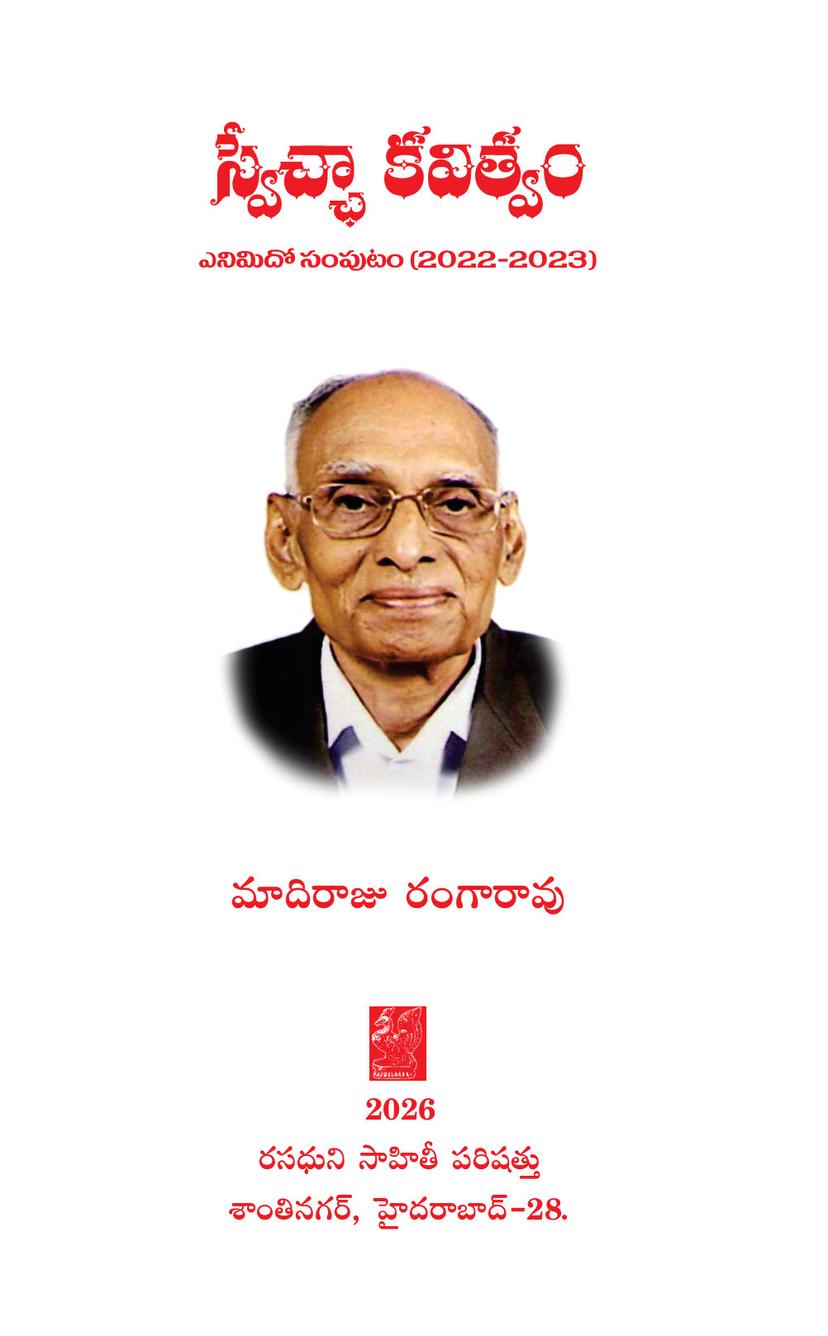
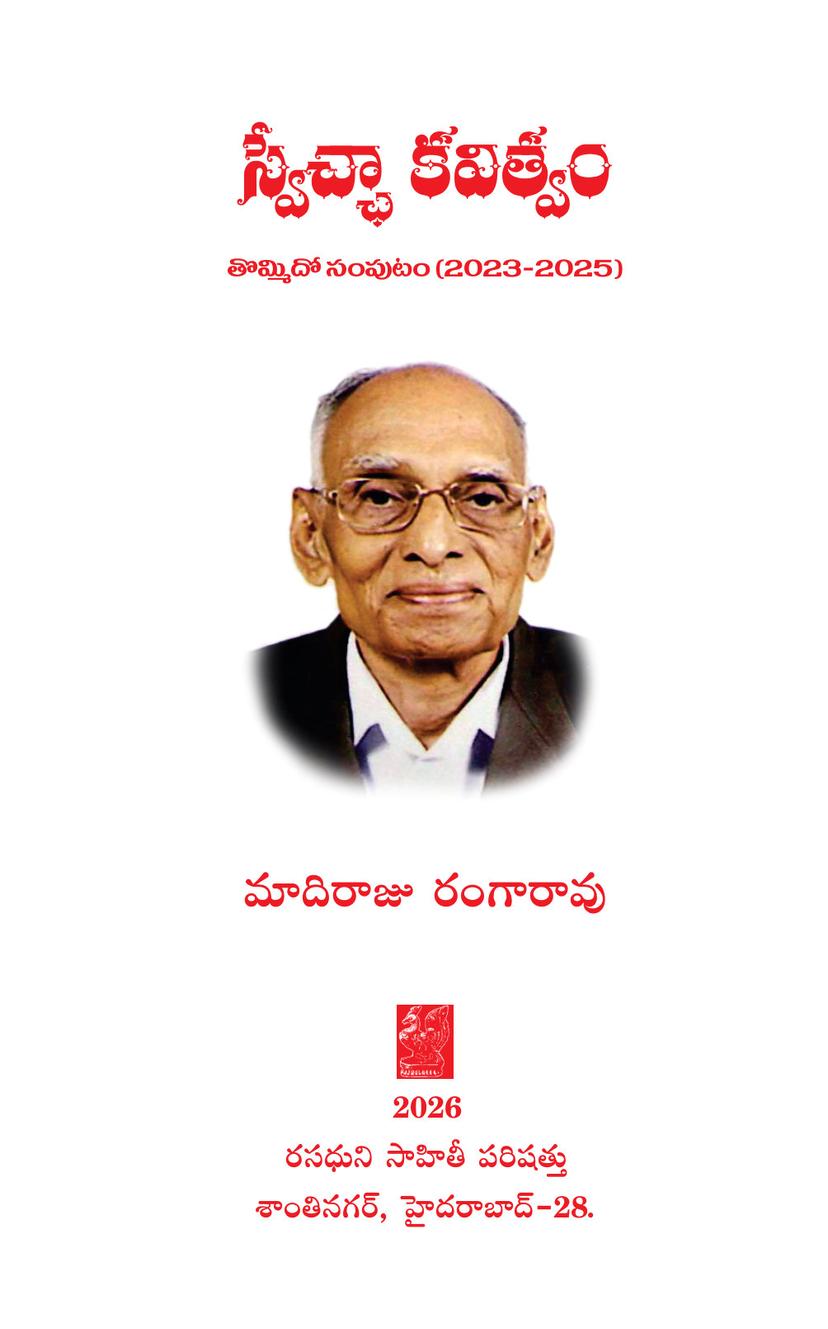
Hover to pause · Click any book to read
ఆర్కైవ్ అన్వేషణ
Explore the Archive
కవి గురించి
About the Poet
Biography, academic career, and a lifetime dedicated to Telugu literature.
Exploreస్వేచ్ఛా కవిత్వము
Swecchaa Kavitvamu
Nine volumes of free verse poetry spanning decades of creative expression.
Exploreసాహిత్య విమర్శ
Literary Criticism
Scholarly analysis of Dasarathi, Gurajada, Kavitrayam, and Mahaprasthanam.
Exploreసాహిత్య వ్యాసాలు/కవితలు
Literary Essays/Poems
Essays and poems that appeared in literary magazines across decades.
Exploreమీడియా & రికార్డింగ్స్
Media & Recordings
Poetry recitations, Kavi Sammelanam performances, interviews, and rare recordings.
Exploreపురస్కారాలు
Awards & Recognition
Best Teacher Award, Best Modern Poetry Award, UGC fellowships, and more.
Exploreచిత్రమాలిక
Photo Gallery
Photographs from the poet's life, career, literary events, and family.
Exploreసోషల్ మీడియా పోస్టులు
Social Media Posts
Poetry reflections and literary discussions shared on Facebook.
ExploreFrequently Asked Questions
Who is Madiraju Ranga Rao?
Madiraju Ranga Rao (1935–2025) was a Telugu poet, literary critic, scholar, and a pioneering contributor to modern free verse Telugu literature. He authored 160+ poetry collections and 20+ literary criticism works, and served as Senior Professor and Dean at Kakatiya University.
What is Swecchaa Kavitvamu?
Swecchaa Kavitvamu (స్వేచ్ఛా కవిత్వము) means Free Verse Poetry in Telugu. It is a non-traditional poetic style championed by Prof. Madiraju Ranga Rao that prioritizes meaning, emotion, and literary freedom over rigid metrical constraints — the natural voice of a democratic society.
What is modern Telugu poetry?
Modern Telugu poetry focuses on emotional realism, social reflection, literary freedom, and contemporary poetic expression. It moves away from classical Sanskrit-influenced meters and embraces themes of everyday life, social consciousness, and philosophical depth.
How many poetry collections did Madiraju Ranga Rao write?
Prof. Madiraju Ranga Rao wrote over 160 individual poetry collections across six decades, published as the complete Swecchaa Kavitvamu series — nine bound volumes (1953–2025) plus four addendum collections including Maanaveeyam (1971), Mukthadhatri (1972), Muktakaalu & Usha Agamanam (1970), and Melkonna EE Samayam (1975). All are preserved on this digital archive.
Where can I read his poetry?
All nine volumes of Swecchaa Kavitvamu and the four addendum collections are freely available at madirajurangarao.com/poetry — the official digital archive of Prof. Madiraju Ranga Rao's literary legacy. Each volume has a dedicated page with bilingual descriptions, a verified table of contents, and a downloadable PDF. No registration is required.
What is free verse poetry in Telugu?
Free verse poetry in Telugu — Swecchaa Kavitvamu — departs from classical Telugu prosody, particularly the Chhandas system of prescribed syllable counts and metres. It relies on natural speech cadences, vivid imagery, and emotional sincerity. Prof. Madiraju Ranga Rao championed this form as the natural voice of a democratic society, producing over 160 free verse collections.
About Professor Madiraju Ranga Rao
Professor Madiraju Ranga Rao (8 June 1935 – 21 June 2025) was a celebrated Telugu poet, scholar, and literary critic who pioneered the Swecchaa Kavitvamu (free verse poetry) movement in Telugu literature. Born in Pandithapuram, Yellandu, Khammam district, he earned his Ph.D. from Osmania University with a thesis on the poetics of Kavitrayam and went on to serve as Senior Professor and Dean at Kakatiya University (1968–1995). Read his full biography and academic career.
Over a career spanning six decades, he authored more than 160 Telugu free verse poetry collections and 20 literary criticism books, publishing one free verse collection every month for decades. He believed that free verse was the natural literary voice of a democratic society — a conviction he proved through his prolific output and comparative analyses of John Donne's metaphysical poetry alongside classical Telugu traditions.
His honours include the Best Modern Poetry Award from Telugu University (1993), the Best Teacher Award (1992), and a Senior Fellowship from the Department of Culture, Government of India (2004–06). After his passing, his family established the Madiraju RangaRao Literature Center, which awards annual prizes to distinguished Telugu and Sanskrit scholars.
Life & Milestones
Born in Pandithapuram, Yellandu, Khammam district
M.A. in Sanskrit from Osmania University
M.A. in Telugu from Osmania University
Ph.D. in Telugu — thesis on Kavitrayam poetics
Joins Kakatiya University as faculty
Best Teacher Award
Best Modern Poetry Award — Telugu University
Retires from Kakatiya University after 27 years
Senior Fellow, Department of Culture, Govt. of India
State Govt Recognition for eminent contributions to literature
Passes away on June 21, leaving a vast literary legacy